Blog · August 30, 2026
What to Wear as the Bride for a Colorado Elopement
Fabric, length, layering, and how to pack a dress on an international flight, for brides marrying outdoors at altitude without a bridal party to help.
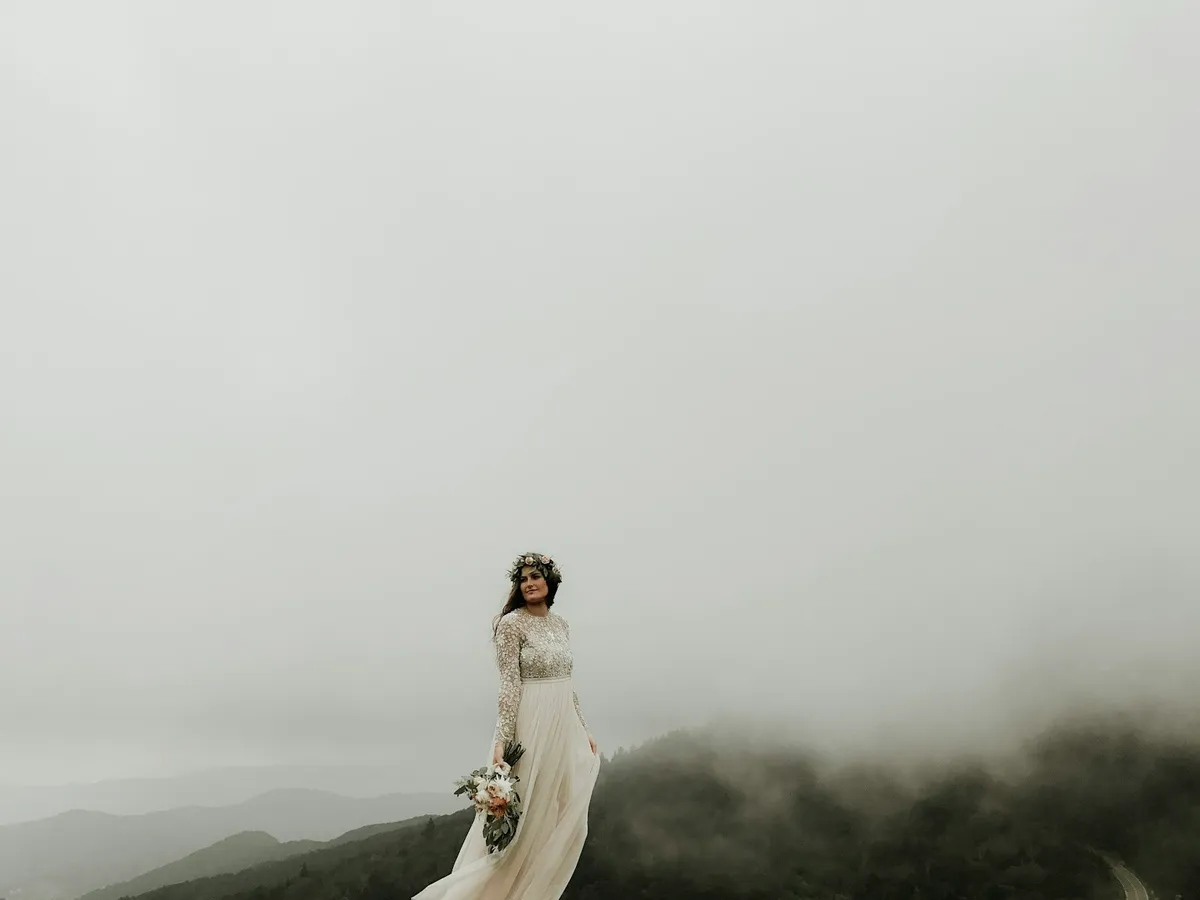
Colorado’s elopement venues are outdoors, at altitude, and often a short walk from where you park: a trailhead, an overlook, a clearing. That changes what works as a wedding dress in a way most bridal advice doesn’t cover, since most bridal advice assumes a venue, a bridal suite, and a team helping you get dressed. Self-solemnizing usually means it’s just the two of you, so the dress needs to work without an attendant too. See dressing for a Colorado elopement for the general altitude and layering picture this post builds on.
Fabric: wind and altitude change what “flowy” means
A dress that looks perfect and still in a photo studio can look like a parachute at an exposed overlook. Colorado’s mountain venues are frequently windy, and wind is stronger and steadier at altitude than most people expect.
- Structured fabrics (crepe, satin, mikado) hold their shape in wind. Chiffon, tulle, and organza move beautifully in a controlled setting but can fight you at a windy ceremony site.
- A fitted or A-line silhouette is easier to manage outdoors than a full ballgown skirt, simply because there’s less fabric for the wind to catch, and less to hold up while walking over grass or gravel.
- If you love a flowy silhouette anyway, plan for it: a second person (or your partner) holding or bustling the skirt during the actual walk to the site is a normal, common workaround, not a sign something went wrong.
Length: floor-length and uneven ground don’t mix well
Most Colorado ceremony sites aren’t paved. Trailheads, overlooks, and alpine meadows mean grass, gravel, dirt, or rock underfoot, sometimes with a short uphill walk to reach the actual spot.
- A tea-length or midi dress avoids the hem-dragging-on-dirt problem entirely, and is worth seriously considering for an outdoor elopement even if it wouldn’t be your first instinct for a traditional wedding.
- If you want floor-length, ask about a bustle for the walk itself, not just for after the ceremony. Most alteration shops can build this in; it’s a standard request, not a special one.
- A detachable overskirt (worn to the ceremony site, removed for photos, or the reverse) is a genuine middle ground: full silhouette in photos, manageable fabric for the actual walk.
If you’re still choosing a dress, browsing tea-length and convertible-style options online (opens in a new tab) before you fly narrows the field to styles that actually work outdoors, rather than discovering the terrain problem after you’ve already bought a full ballgown.
Layering over a strapless or sleeveless dress
Strapless and sleeveless bodices are common in bridal wear, but Colorado mornings and high-elevation venues run cold well into summer, and mountain evenings drop fast. See dressing for a Colorado elopement for the general case; a few bridal-specific options:
- A cropped faux-fur or knit bolero reads as a deliberate styling choice in photos, not a cold-weather compromise, and is warm enough for most Colorado mornings without bulk.
- Long fingerless gloves or arm warmers cover more skin than a wrap without hiding the dress itself, a common choice for sleeveless gowns at outdoor mountain ceremonies.
- A thin silk or merino thermal base layer (the kind sold for skiing) is warm enough to wear under a fitted gown without adding visible bulk, and packs flat for travel. Cotton thermals are bulkier and hold moisture longer if you get warm walking to the site; silk or merino perform better under the specific circumstance of “worn under a dress, briefly, outdoors.”
Footwear: plan for three situations, not one
Most brides underestimate how much walking is involved before “I do.”
- Getting to the site: trail shoes, sneakers, or boots, whatever the terrain requires. Nobody sees your feet on the walk in.
- The ceremony itself: a low block heel or wedge holds up on grass and gravel far better than a stiletto, which can sink into soft ground or gravel entirely.
- After, for photos or dinner: whatever you want to be seen in, since this is the point people are most likely to be looking at your feet.
Carrying two pairs (walking shoes plus ceremony shoes) in a small bag is a common, unremarkable choice among outdoor brides generally, not a Colorado-specific quirk, but it matters more here given how often the ceremony site itself involves a short hike.
Packing a dress for an international flight
This is the part most bridal advice skips entirely, since most brides aren’t flying internationally with their dress in checked or carry-on luggage.
- Fold, don’t just stuff, using tissue paper in every fold line. Acid-free tissue paper (sold specifically for garment storage) placed inside each fold prevents sharp permanent creases better than fabric alone.
- A garment bag inside a suitcase still needs the dress folded, not laid flat, unless you’re flying a route and airline that allows a hanging bag in a cabin closet; most economy international flights don’t have one.
- Steam, don’t iron, on arrival. A handheld garment steamer packs small and works on most bridal fabrics; direct iron heat can scorch delicate fabric or beading. Many hotels can lend or rent one if you don’t want to pack your own; ask when you book.
- Test this before you leave, not for the first time the morning of. Fold and unfold the actual dress once at home so you know how it travels, rather than finding out for the first time in a Colorado hotel room.
Getting dressed without a bridal party
A traditional bridal suite assumes a team: someone to lace a corset back, bustle a train, or manage a long veil. Self-solemnizing usually means it’s you and your partner, full stop.
- A back zipper is easier solo (or with just your partner) than a lace-up corset back. If you already own or are considering a corset-back dress, practice getting into it with only the help you’ll have on the day.
- A shorter veil, or no veil, removes one more thing that needs a second pair of hands in wind. If a veil matters to you, a birdcage or shoulder-length option is easier to manage alone than a long cathedral veil at an exposed, windy site.
The takeaway
The dress that photographs best in a bridal salon isn’t automatically the one that works at a windy overlook or a mile from the parking area. Structured fabric over flowy, tea-length or a detachable overskirt over a hem that drags, a packable thermal layer over hoping you’re not cold, and a dress you can get into without an attendant: none of this is about compromising on how you look, it’s about the same dress working in the setting you’ve chosen. See dressing for a Colorado elopement for what to pack alongside it, and rings or vows if you’re deciding what else is required versus optional for the ceremony itself.
The dress-shopping link above is an affiliate link. Full disclosure.